|
|
|
|
|
curriculum vitae: scientific & art publications:
|
|
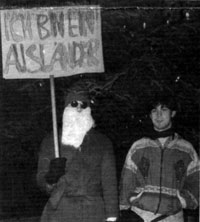
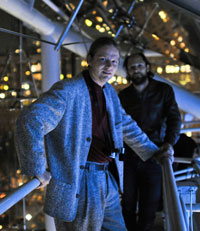
Tim Otto Roth was born 1974 in Oppenau/Black Forest (D). In 1994/1995 he started his studies in philosophy and politics at the University of Tübingen (D). From 1995-2000 he studied arts at the Kunsthochschule Kassel (D). In 2001 he was appointed as “Meisterschüler” with Prof. Floris M. Neusüss. 2004 he received a second final degree in the Theory of Visual Communication. In Autumn 2008 he started a phd programm at the Academy of Media Studies in Cologne. He lives and works in Oppenau and Cologne.
|
Tim Otto Roth wurde 1974 in Oppenau im Schwarzwald geboren. 1994-1995 studierte er Politik- und Philosophie in Tübingen (D) und wechselte 1995 zum Studium der Freien Kunst an die Kunsthochschule Kassel (D). Nach seinem Abschluß wurde er 2001 zum Meisterschüler bei Floris M. Neusüss ernannt. 2004 folgt ein zweiter Abschluß in der Theorie der Visuellen Kommunikation. Im Herbst 2008 hat er einen Promotionsstudiengang an der Kunsthochschule für Medien in Köln aufgenommen. Er lebt und arbeitet in Oppenau und in Köln.
|
  |
Arts as pictorial critique
The oeuvre of Tim Otto Roth can be outlined as a extensive pictorial and media critique in a sense of an experimental reflection. By the means of a minimalist reduction on the initial conditions he finds out what a medium can do and what it can’t do. His photogram works are an excellent example to illustrate this method. A photogram just results of a simple constellation: An object casts a shadow on a light sensitive surface which finally records this impression as a shadow picture. Tim Otto Roth is fascinated by the simplicity of that process and its reminiscence to the archetypical phenomenon of the shadow. He also points out that the X-rays as a kind of photogram even caused a revolution in the history of pictorial representation. Hence deliberately out of the current discourse he denotes the shadow pictures as post photographic. For Floris M. Neusüss his former student sets apart significantly from other artists especially refining the medial field by works like the crypto-pornographic approach to the female body openings or the discovery of the video chip as a stage for light and shadow play in motion.
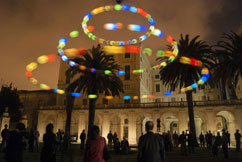
But Tim Otto Roth addresses his minimalist question also to a contemporary form of pictorial representation: the screen display. Being invited to realize a project in 2003 at the Art Façade in Munich he asked, if a reduced matrix of just 10 by 10 picture elements speaking pixels still can represent an impage. In view of the KPN Telecom Tower in Rotterdam (NL) with its extensive media façade his immediate idea was if it is possible to animate pixels to interact visually to create dynamically an image by their “intercourse”. The fact, that the artist responds with images from particle and astrophysics, respectively with models created by cellular automata in bioinformatics, shouldn’t mislead the spectator. Finally it is the ever-engaging question in the arts for the nature of pictures, which led him in the technical universe of the scientific images.
Tim Otto Roth’s minimalism includes also temporal aspects especially with regards to the Imachinations. For 100 days this series of daily interfering abstract images appear via internet almost as projection parallel in different places. In an interview Beat Wyss emphasized the process of deceleration of the web based Imachinations. With reference to Marcel Duchamp he spoke about a „retardation of the calculating process.”

„retardation of the calculating process.”- Imachinations at the Bibliotheca Alexandrina, 2005
In view of the numerous light and projection based works in the public space people tend to simplify Tim Otto Roth’s approach as light art. Quite contrary the artist challenges this young form of art with his minimalist approach. On the occasion of the German Light Art Award for his concept “switch off” Uwe Rüth wrote in the juries plea: “To win a light award with an action centring the darkness implicates to render moot the whole light art and to disclose that light can’t exist without darkness”.
|
Kunst als Bildkritik
Das Oeuvre von Tim Otto Roth läßt sich als eine umfassende Bild- und Medienkritik im Sinne einer experimentellen Reflexion beschreiben. Was ein Medium kann oder nicht kann, findet er durch eine minimalistischen Reduktion auf seine medialen Ausgangsbedingungen heraus. Exemplarisch steht hierfür seine Arbeit mit dem Photogramm, das aus einer denkbaren einfachen Konstellation hervorgeht: Ein Gegenstand wird auf einen Schatten auf eine lichtempfindliche Oberfläche, welche den Hell- und Dunkeleindruck dauerhaft als Schattenbild fixiert. Es ist jedoch nicht nur die Einfachheit des Prozesses und die Reminiszenz an das Urphänomen des Schattens, die Tim Otto Roth an den Schattenbildern fasziniert, sondern auch, daß es sich gleichzeitig um ein Medium handelt, daß spätestens in Form der Röntgenbilder die menschliche Vorstellung von bildlicher Darstellung revolutioniert hat. Ganz bewußt bezeichnet er deshalb gegen den gängigen Diskurs diese Schattenbilder als postphotographisch. Für Floris M. Neusüss stellt er wie kein anderer zeitgenössischer Künstler das Möglichkeitsfeld des Photogramms neu auf, sei es durch kryptopornographische Annäherung an weiblichen Körperöffnungen oder die Entdeckung des Videochips als Bühne für ein bewegtes Licht- und Schattenspiel.
Seine minimalistische Fragestellung richtet Tim Otto Roth aber auch an die zeittypische Form heutiger Bilder: dem Bildschirm oder Display. Wie viele Bildelemente - heute sprich man von Pixel - braucht man, um bei einer Darstellung von einem Bild zu sprechen, fragte er sich 2003 angesichts einer Einladung ein Projekt an der Kunstfassade in München zu realisieren. Den Versuch Pixel miteinander interagieren zu lassen, so daß sie selbst ein Bild generierten, war die Antwort auf eine Offerte, ein Konzept für die wohl größte Medienfassade am KPN Telekomtower in Rotterdam (NL) zu entwickeln. Auch wenn der Künstler die Antworten in den Bildern aus der Astro- und Teilchenphysik, bzw. in den Modellen zellulärer Automaten der Bioinformatik fand, so darf dies nicht darüber hinwegtäuschen, daß es die seit jeher die Kunst bewegende Frage nach dem Bild war, die ihn in das technische Universum naturwissenschaftlicher Bilder geleitete.
Minimalistisch agiert Tim Otto Roth auch in einem zeitlichen Sinne bei den Imachinationen. Jeweils für 100 Tage erscheint diese serielle Arbeit aus täglich sich aufs neue überlagernden Bildern via Internet als Projektion gleichzeitig an verschiedenen Orten aus Kunst und Wissenschaft. Beat Wyss hob in einem Interview auf den Prozeß der Verlangsamung der internetbasierten Imachinationen ab und sprach Bezug nehmend auf Duchamp von „einer Verspätung von Rechenprozessen“.
Angesichts seiner vielen licht- und projektionsbasierten Arbeiten im öffentlichen Raum wird Tim Otto Roths Ansatz allzu leichtfertig als Lichtkunst betrachtet, obgleich er diese auch selbst radikal in Frage stellt. So schreibt Uwe Rüth anläßlich der Verleihung der Deutschen Lichtkunstpreises für sein Konzept„switch off“: „Einen Lichtkunstpreis mit einer Aktion gewinnen zu wollen, welche die Dunkelheit in den Mittelpunkt stellt, heißt auch alle Lichtkunst zu hinterfragen und aufzuzeigen, daß das Licht nicht ohne Dunkelheit existiert. Eine Erkenntnis, die abhanden genommen zu sein scheint und auf die Tim Otto Roth eigentlich aufmerksam macht.“
|
|
Art + Science
In 2004 Tim Otto Roth received also the International Media Art Award for his pixel trip on the retinas of particle and astrophysics. The head of Center for Art and Media ZKM Karlsruhe Peter Weibel characterizes this work as “a brilliant outpost for a push program - a public understandig of sciences and humanities”.
Tim Otto Roth excursions in the borderland of art and science are not at all a tribute to the current hype of scientific topis in the media. Likewise he can’t do anything with the trivialising criticism of the sciences in circles of the arts. He rather grasps the advanced application of visualization techniques particularly in fields like particle physics, astrophysics, (bio)informatics and molecular biology as aisthetical challenge for the arts. Tim Otto Roth accepts that dare by a close cooperation with scientists in the place. So his art + science projects are less projects about the sciences but projects with the sciences. Among others he collaborated with Max-Planck-Gesellschaft (D), Karlsruhe Insitute of Technology (D) Brookhaven National Laboratory (US), Fermilab (US) or KEK Tsukuba (JP). In 2007 he was invited as artist in residence at the Centre for High Performance Computing (ZIH), TU Dresden. Definitely a highlight of his research visits was a trip to the Atacama Desert in Chile, where he visited as the first artist the Paranal Observatory of the European Southern Observatories (ESO).


the latest art and science collaboration: Cosmic Revelation at Forschungszentrum Karlsruhe (KIT)
|
Art + Science
Als „ein Paradebeispiel für ein Push-Programm, eines public understandig of the sciences and humanities“, “, bezeichnete der Leiter des ZKM Karlsruhe Peter Weibel Tim Otto Roths Pixeltrip auf den Netzhäuten der Astro- und Teilchenphysik an der Kunstfassade München anläßlich der Verleihung des Internationalen Medienkunstpreises 2004.
Tim Otto Roths Exkurse ins Grenzgebiet von Kunst und Naturwissenschaft sitzen dabei weder dem aktuellen naturwissenschaftlichen Hype in den Medien auf, noch stimmt der Künstler in die in Kunstkreisen gerne von außen geübten Pauschalkritik an „den“ Naturwissenschaften ein. Vielmehr begreift er den avancierten Einsatz von Visualisierungstechniken insbesondere in Bereichen wie der Teilchenphysik, Astrophysik, (Bio)Informatik und Molekularbiologie als aisthetische Herausforderung für die Kunst.
Tim Otto Roth begegnet dieser durch eine enge Zusammenarbeit mit Naturwissenschaftlern vor Ort. Seine Art & Science Projekte sind deshalb keine Projekte über die Naturwissenschaften sondern stets Projekte mit den Naturwissenschaften, u.a. kooperierte er bereits mit der Max-Planck-Gesellschaft (D), der TU Dresden (D), dem Brookhaven National Laboratory (US), dem Fermilab (US) und dem KEK Tsukuba (JP). Seine Forschungsaufenthalte führten ihn bis in die chilenische Atacamawüste, wo er als erster Künstler das Observatorium auf dem Cerro Paranal der European Southern Observatories (ESO) besuchte.

|
|
Media Consulting
Tim Otto Roth not only creates artistic concepts, but thanks to his expertise and the cooperation with programmers and light engineers he develops new media concepts for light installations and public displays. For instance he realized in collaboration with Cologne Digital a new concept to bring the 80 m high light wall at the KPN Telecom Tower Rotterdam online and to present dynamical content.
Research
Roth has published texts and interviews concerning the interplay of art & science since 1997. He is one of the few leading experts for the science and art historical research in the photogram. He is internationally established in that field as theoretician, curator and agent for contemporary photogram artists. In 2001 he founded the research portal www.photogram.org. In 2003 he started an interview cycle discussing different pictorial concepts in the humanities and the sciences. (more...)
text: GW
|
Media Consulting
Tim Otto Roth entwirft nicht nur künstlerische Konzeptionen, sondern entwickelt darüber hinaus in Zusammenarbeit mit Programmierern und Lichttechnikern auch die technische Umsetzung für öffentliche Lichtinstallationen und Großdisplays. So erarbeitete er für Pixelsex eigens ein neues Medienkonzept, das es nun erstmals erlaubt, dynamische Inhalte via Internet an die 80 m hohe Medienfassade am KPN Tower in Rotterdam zu übertragen.
Forschung
Seit 1997 publiziert Roth im Grenzgebiet von Kunst und Wissenschaft Texte und Interviews. Er gehört zu den wenigen führenden Experten einer kunst- und wissenschaftshistorischen Photogrammforschung. Internationale Anerkennung verschaffte er sich bislang als Theoretiker, Kurator und Agent zeitgenössischer Photogrammkünstler. 2001 gründete er das Forschungsportal www.photogram.org. 2003 startete er einen bildwissenschaftlichen Interviewzyklus in dem sowohl Geistes- wie Naturwissenschaftler zu Wort kommen. (mehr...)
Text: GW
|
|
Tim Otto Roth's scientific research:
|
|