For about 10 years Tim Otto Roth has worked on the photogram and belongs now to the few leading adepts of that medial outlaw. He studied among others with Floris M. Neusüss, whose anthological work he continues in the new form of the portal www.photogram.org. The English portal with database entries to about 300 photogram artists advanced to one of the most important information sources in that field. After his art studies Roth also received with a theoretical scholarly piece on the photogram a final degree in the Theory of Visual Communication.

In 2001/02 he was guest lecturer in Madrid und Valencia (E). 2004/05 he gave courses and lectures at the Kunsthochschule Kassel. Together with Peter Weibel he was chairman of the symposium “The Photogram. Light, Trace and Shadow” at the Center for Arts and Media ZKM Karlsruhe (D) in 2006. He curated in 2007 the photogram film program in the context of the photogram exhibition kamera_los at the Museum der Modern in Salzburg (A). In his publications he opens up new photogrammatical terrain. His recent articles dealt with the photogram film and the history of the full body photogram.

Seit rund 10 Jahren forscht und arbeitet Tim Otto Roth zum Photogramm und gehört mittlerweile zu den wenigen führenden Kennern dieses medialen Outlaws. Er studierte bei Prof. Floris M. Neusüss in Kassel, dessen anthologische Arbeit er in neuer Form mit dem Portal www.photogram.org fortsetzt. Das in englischer Sprache verfaßte Forschungsportral, das mit einer Datenbank mit Einträgen zu rund 300 Photogrammkünstlern aufwartet, gehört derzeit wohl zu einer der weltweit wichtigsten Informationsquelle zu dem Themenfeld. Nach dem Kunststudium schloß Roth ein Studium in der Theorie der Visuellen Kommunikation mit einer theoretischen Arbeit bei Prof. Dr. Stefan Majetschak und Prof. Dr. Karin Stempel zum Photogramm ab.

2001/02 referierte er als Gastdozent in Madrid und Valencia (E). 2004/05 folgten zwei Lehraufträge an der Kunsthochschule Kassel. 2006 leitete er zusammen mit Peter Weibel das Symposiums Das Photogramm. Licht, Spur und Schatten am ZKM Karlsruhe. 2007 kuratierte er das photogrammatische Filmprogramm im Rahme der Photogrammausstellung kamera_los am Museum der Modern in Salzburg (A). Mit seinen Veröffentlichungen erschließt er immer wieder photogrammatisches Neuland. So publizierte er unlängst zum Photogrammfilm und dem Ganzkörperphotogramm.

Photogram Research
= Research in Shadow Pictures

Tim Otto Roth’s approach to the photogram is affected by his own artistic practice. He extended the medial spectrum of the photogram. Exploring the possibilities of electronic surfaces he discovered the fragile silicon video chip, the core of every video and digital camera, as a new photogrammatical stage. Above all in the course of his studies he learnt the historical photographical printing techniques. The resulting comprehension of this interior “material culture” of the photogram provides a new insight into the world of shadow pictures.

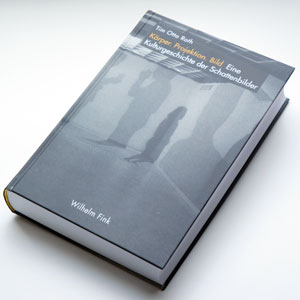
In his image science orientated research he develops new perspectives on the photogram as an independent post photographic medium which differs as a shadow picture and by its potential contact significantly from photography based on the rule of central perspective. Furthermore he disengages the medial reflection from the art context and focuses e.g. at the past symposium at the ZKM Karlsruhe the scientific application of the shadow pictures.

Photogrammforschung
= Schattenbildforschung

Tim Otto Roths Forschungsansatz zum Photogramm ist durch seine eigene künstlerisches Praxis geprägt, die ihn völlig neue elektronische Photogrammverfahren, die z.B. auf einem Videochip basieren, entdecken ließen. Ferner lernte er während seines Studiums historische photographische Druckverfahren kennen und herzustellen. Dieses Verständnis der „materiellen Kultur“ des Photogramms von Innen heraus gewährt ihm einen gänzlich anderen Zugang zu dem Medium.

In seiner bildwissenschaftlich orientierten Forschung entwickelt er neue Perspektiven auf das Photogramm als eigenständiges, postphotographisches Medium, das sich als Schattenbild und potentielles Berührungsbild fundamental von dem Bildprogramm der zentralperspektivischen Photographie unterscheidet. Ferner löst er die mediale Betrachtung aus dem Kunstkontext heraus und lenkt den Fokus, wie zum Symposium am ZKM geschehen, auch auf die wissenschaftliche Verwendung der Schattenbilder.

Imachinations

Imachinationen


Interviewpartners in the reactive zone:
Jean Baudrillard
Ludger Brümmer
Thomas G. Dietterich
Erwin Flückiger
Andreas Glindemann
David Jensen
Robert Hopkins
Barbara Könches
Ekkehart Krippendorff
Jens Kube
Harald Lesch
Dominic M McIver Lopes
Christa Maar
Helga de la Motte-Haber
Frieder Nake
Jennifer Neville
C. David Page
Klaus Rehkämper
Lutz Priese
Andreas Schelske
Eva Schürmann
Peter Sloterdijk
Woody Vasulka
Peter Weibel
Joseph Weizenbaum
Michael Werman
Lambert Wiesing
Reinhard Wilhelm
Beat Wyss

For Tim Otto Roth there are also post photographic pictures he calls imachinations. Unlike an indexical shadow pictures an imachination results of a complex interaction of man and machine. This includes among others the images from the giant particle accelerators or the concept of cellular automata representing a new qualitative approach in the computer based modelling. To work out the new quality of the resulting images his artistic Imachination Project appears mainly in scientific institutions and is accompanied by an extensive interview series. About 30 interviews are published online in the reactive zone. The discussions with experts from the humanities and the sciences, which are involved somehow in the imachinative process, represent a wide variety of ideas about the concept of imachination.

Postphotographisch sind für Tim Otto Roth auch die Bilder, die er als Imachinationen bezeichnet. Im Gegensatz zum indexikalischen Spurbild des Photogramms geht die Imachination aus der komplexen Interaktion des Menschens mit Maschinen hervor. Er begreift darunter u.a. die elementarphysikalischen Bilder der riesigen Teilchenbeschleunigeranlagen, aber auch das Konzept der zellulären Automaten, das einen völlig neuen qualitativen Ansatz in der computerbasierten Modellierung darstellt. Um die neue Qualität der resultierenden Bilder herauszuarbeiten, erscheint sein künstlerisches Imachinationenprojekt maßgeblich in wissenschaftlichen Forschungstätten und wird begleitet von einer umfassenden Interviewserie. Die rund 30 online in der reactive zone publizierten Gespräche mit führenden Natur- und Geisteswissenschaftlern, die entweder produktiv oder reflektiv in den imachinativen Prozess eingebunden sind, gewähren ein breitgefächertes Meinungsspektrum zum Themenkomplex der Imachination.

Recent Publications

& Talks

- Roth, Tim Otto: Shooting the Intruder with Light - Achim Mohné’s Dust Shadowgraphs, in: Roth, Tim O. (Ed.): POSITION III, Oppenau/Köln, Frühjahr 2008.
- Roth, Tim Otto: Imprint, impression, expression - Peter Gerwin Hoffmann's Traces in the historical context of the whole-body photogramme,,in: Holler-Schuster, Günther (Ed.): Peter Gerwin Hoffmann [Neue Galerie Graz], Köln 2007, pp. 252-258.
- Roth, Tim Otto: Das Echo der Dinge im Zelluloid – Vom Höhlenkino zum Photogrammfilm, in: Museum der Moderne (Hrsg.): Kamera los, Salzburg 2006, S.57-61.
- Roth, Tim Otto: A Walk on the Retinas of the Extreme Sciences, A Minimalist Concept for an Internet-Based Light Art Art Façade in Munich, Leonardo Volume 39, Issue 1 / February 2006 (MIT Press).
- Roth, Tim Otto: Die Kunst des Verschwindens/ The art of disappearance, interview with Jean Baudrillard, in: EIKON 46 (2004).